

Battery Storage Enters the Balancing Market to Strengthen Grid Stability: Ignitis and emsys VPP Expand Partnership
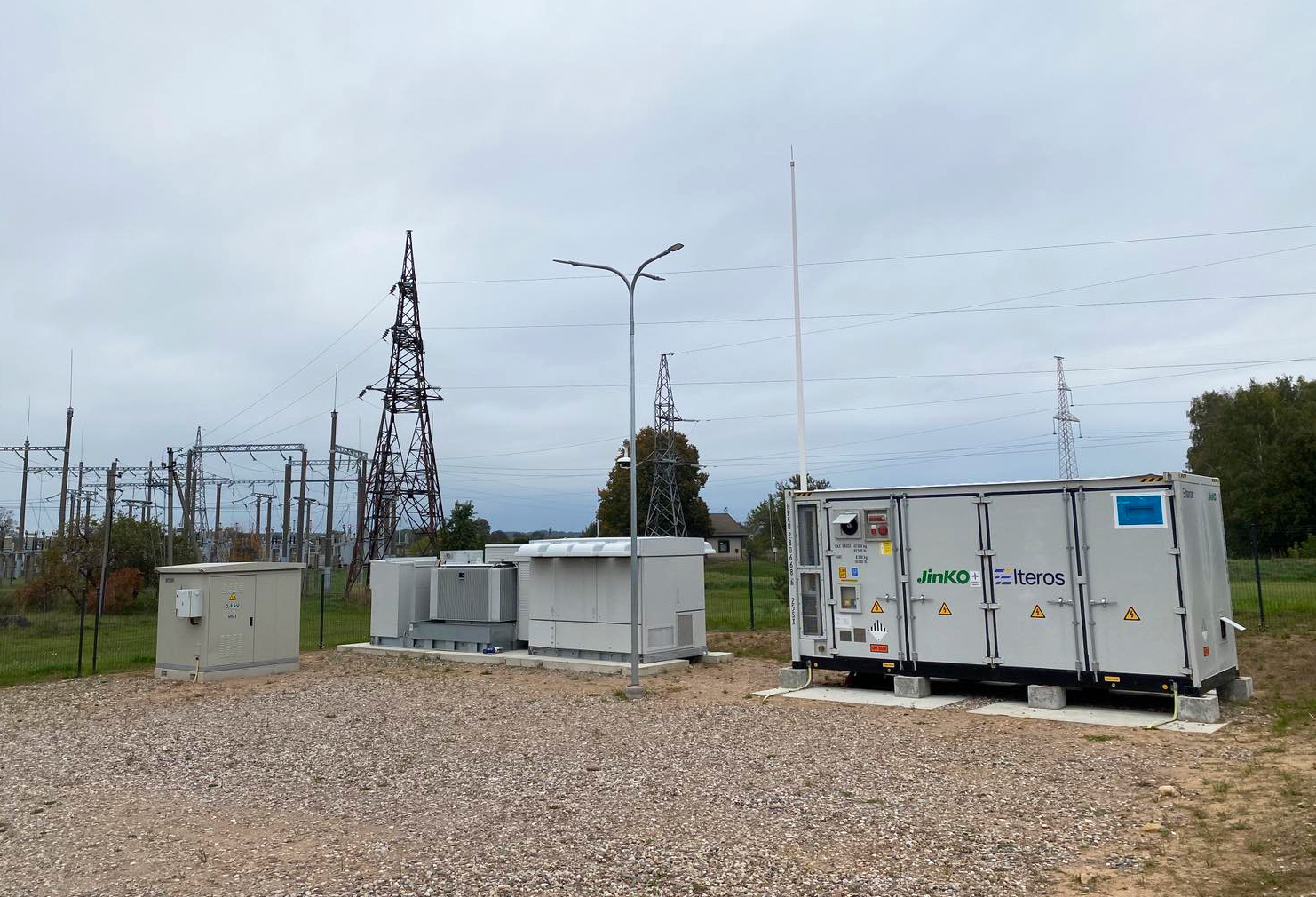
2 MW BESS in Druskininkai/Lithuania
Virtual Power Plant Enables Balancing Services in Lithuania’s Electricity Market
VILNIUS (LITHUANIA)/OLDENBURG (GERMANY), GERMANY, October 19, 2026 /EINPresswire.com/ -- Lithuania’s Ignitis and Germany’s emsys VPP are expanding their Virtual Power Plant (VPP) partnership to strengthen the stability of the Baltic power grid. As part of expanded collaboration, the VPP implemented by emsys VPP for Ignitis will be upgraded with functionality for providing balancing energy in the Baltic power market. By integrating battery storage systems into the VPP, the companies are creating the digital infrastructure needed to support frequency control and stabilize Lithuania’s power grid.Growing Importance of Flexibility in the Lithuanian Power System
As the share of variable renewable energy sources grows, flexible resources that can respond rapidly to changes in the power system are becoming increasingly important. System stability has gained further importance since Estonia, Latvia and Lithuania synchronized with the continental European power grid in February 2025. On 8 February 2025, the Baltic States disconnected from the Russian-controlled IPS/UPS system and successfully joined the continental European synchronous area (ENTSO-E) the following day. This transition introduces new requirements for frequency control and balancing short-term fluctuations in the power system.
‘By expanding our partnership with Ignitis, we are creating new opportunities to use flexible assets in renewable energy trading and grid stabilization,’ says Eike Arndt, Managing Director of emsys VPP. ‘Battery storage systems, in particular, can respond very quickly to changes in the grid and therefore play a key role in increasing the flexibility of the power system.’
From the Virtual Power Plant to Integrated Flexibility Trading
Ignitis and emsys VPP have been collaborating since 2024. The Virtual Power Plant was initially implemented to support the direct marketing of Ignitis’ approximately 650 MW portfolio. The collaboration also includes power generation forecasts for the wind and solar portfolio. With the latest expansion, the VPP can now integrate flexible assets for the provision of balancing power, another step towards strengthening grid stability while supporting renewable energy integration. Battery storage systems are already being traded successfully on the intraday market.
Prequalify Battery Storage for aFRR and mFRR
To participate in the balancing market, the relevant assets must be technically connected and prequalified. They also must be connected to the control system of Lithuania’s transmission system operator, Litgrid. The current project focuses on automatic and manual frequency restoration reserves (aFRR and mFRR). In the future, the solution may be expanded to include additional sources of flexibility, such as wind and solar power plants.
‘Adding the balancing power module to the VPP marks an important next step in our collaboration with emsys VPP,’ says Aivaras Slivikas, Head of Short-Term Trading at Ignitis. ‘Pooling battery storage systems in our Virtual Power Plant enables us to respond more precisely and flexibly to the daily needs of the electricity and balancing markets, while maximizing the value generated by these assets.’
Balancing Power Keeps the Grid Frequency Stable
Balancing power offsets short-term differences between electricity generation and consumption, helping to maintain a stable grid frequency of 50 Hz. If generation unexpectedly falls, positive balancing power can be activated by increasing generation, reducing demand or discharging energy from storage systems into the grid. Conversely, negative balancing power is activated when there is a surplus of electricity. The required response time determines whether Frequency Containment Reserves (FCR), automatic Frequency Restoration Reserves (aFRR) or manual Frequency Restoration Reserves (mFRR) are used. These services operate over different timescales and work together to restore balance in the power system.
This project is supported by the German Federal Ministry for Economic Affairs and Energy as part of the Renewable Energy Solutions Programme of the German Energy Solutions Initiative.
About Ignitis
Ignitis is the largest electricity supplier in Lithuania, with a loyal customer base built on reliable operations and modern, sustainable solutions. Our operations in Latvia, Estonia, Finland and Poland support the development of renewable energy across the region. We serve more than 1.5 million customers with advanced B2C and B2B solutions and services that help them manage, consume and generate energy more efficiently. By combining innovative solutions with the opportunities offered by renewable energy, we help our customers to reduce energy costs, optimize expenses and contribute to a more sustainable future. We are part of Ignitis Group, a leading integrated energy group in the Baltic states.
https://ignitisgrupe.lt/en
About emsys VPP GmbH
emsys VPP is a leading provider and pioneer in the development of the Virtual Power Plant. Its sophisticated Software as a Service (SaaS) solution connects decentralized power generators, storage systems and controllable consumers to customers' trading systems and grid operators' control systems. Numerous energy suppliers and direct marketers in Germany, Europe and beyond use the Virtual Power Plant to monitor and remotely control aggregated electricity production, and to trade profitably on the wholesale and balancing power markets.
www.emsys-renewables.com
About German Energy Agency (dena)
The German Energy Agency (dena) is a centre of excellence for the applied energy transition and climate protection. dena studies the challenges of building a climate-neutral society and supports the German government in achieving its energy and climate policy objectives. Since its foundation in 2000, dena has worked to develop and implement solutions and bring together national and international partners from politics, industry, the scientific community and all parts of society. dena is a project enterprise and a public company owned by the German federal government. dena’s shareholder is the Federal Republic of Germany.
www.dena.de/en/
About German Energy Solutions Initiative
With the aim of positioning German technologies and know-how worldwide, the German Energy Solutions Initiative of the Federal Ministry for Economic Affairs and Energy (BMWE) supports suppliers of climate-friendly energy solutions in opening up foreign markets. The focus lies on renewable energies, energy efficiency, smart grids and storage, as well as technologies such as power-to-gas and fuel cells. Aimed in particular at small and medium-sized enterprises, the German Energy Solutions Initiative supports participants through measures to prepare market entry as well as to prospect, develop and secure new markets.
www.german-energy-solutions.de
Svenja Klötscher
energy & meteo systems GmbH
+49 4944 124921497
Visit us on social media:
LinkedIn
Instagram
YouTube
Legal Disclaimer:
EIN Presswire provides this news content "as is" without warranty of any kind. We do not accept any responsibility or liability for the accuracy, content, images, videos, licenses, completeness, legality, or reliability of the information contained in this article. If you have any complaints or copyright issues related to this article, kindly contact the author above.
